A flawless makeup base does not always depend on using more foundation or owning a huge collection of beauty products. Sometimes, the tool you use makes the biggest difference. A Makeup Sponge can help blend foundation, concealer, cream blush, and other complexion products for a smoother, more even-looking finish. With the right sponge and a simple technique, your makeup can look polished without feeling heavy or overdone.
Why Is a Makeup Sponge So Useful?
Ever applied foundation and noticed streaks around your nose, uneven coverage on your cheeks, or visible lines near the jaw? The issue may not be your foundation at all. It could be the way the product is being blended.
A sponge helps distribute makeup gradually across the skin. The soft bouncing motion blends product instead of dragging it from one area to another. This can create a more seamless finish, especially when you want your foundation to look closer to skin rather than sitting on top of it.
Sponge vs Brush Which Works Better?
A brush and a sponge can both be useful, but they create slightly different effects. Brushes are helpful when you want quick application or more concentrated coverage. A sponge is often better when you prefer a softer, diffused finish.
You do not have to choose only one. Many people apply foundation with a brush and then use a sponge to soften visible lines and blend the edges for a more natural result.
How to Choose the Right Makeup Sponge
Choosing the right tool becomes easier when you focus on your routine rather than the number of options available.
Consider the Shape
Rounded sponge shapes are useful for larger areas such as the forehead and cheeks. Pointed ends can reach smaller areas around the nose and under the eyes, while flat sides can help with controlled application.
If you want one versatile tool, choose a shape that gives you access to both broad and detailed areas.
Check the Texture
A good makeup blending sponge should feel soft and flexible. If it feels rough or overly stiff, it may be uncomfortable and make blending harder.
The texture should allow you to bounce the sponge lightly across the skin without unnecessary pulling.
Wet or Dry Which Works Better?
The answer depends on the finish you prefer and the formula you are using.
Using a Damp Sponge
A damp sponge is popular for foundation because it can create a fresh, natural finish. Soak the sponge, squeeze out excess water, and make sure it is damp rather than dripping wet.
This technique can also help you blend product more easily and achieve lighter-looking coverage.
Using a Dry Sponge
A dry sponge can provide a more concentrated application and may work well when you want stronger coverage. Try both methods with your usual base product to see which gives you the finish you prefer.
How to Apply Foundation With a Sponge
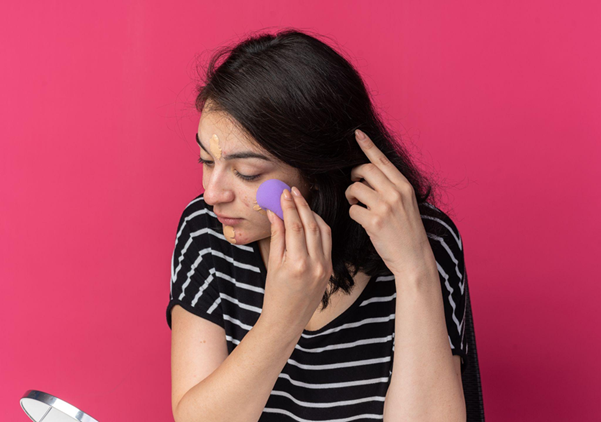
Start with a small amount of foundation. Place it on the centre of your face and gently bounce the sponge outward.
Do not rub or sweep aggressively. Short, controlled tapping motions help blend the product while keeping coverage even.
If you need more coverage, add another thin layer instead of applying a large amount at once. This can help prevent a heavy or cakey finish.
Use the Pointed End for Detail
The pointed side is particularly useful around the sides of the nose, under the eyes, and near the corners of the mouth. These areas can be difficult to reach with a larger sponge surface.
For concealer, use gentle tapping motions rather than pressing the sponge too hard against the skin.
Can You Use a Sponge for Other Makeup?
A Makeup Sponge is not limited to foundation. Depending on the formulation, it can also be useful for concealer, cream blush, liquid contour, and some highlighters.
For cream blush, tap a small amount onto the cheeks and blend the edges gently. This creates a softer result than placing a large amount of pigment directly onto the skin.
Beauty brands such as Simply Nam also offer easy-to-use makeup products that can work well with simple application techniques. When choosing a sponge, think about the products you already use and the type of finish you enjoy rather than following every new beauty trend.
How to Keep Your Makeup Sponge Clean
A makeup tool that touches your skin regularly should be cleaned properly. Wash the sponge after use with a gentle cleanser or a product designed for makeup tools.
Rinse it thoroughly and leave it somewhere clean and well ventilated to dry. Avoid putting a damp sponge straight into a closed makeup bag.
Replace the sponge when it starts tearing, develops an unusual smell, or becomes difficult to clean. A clean, well-maintained sponge is also easier to use.
Common Mistakes to Avoid
One of the easiest mistakes is pressing the sponge too hard. You only need gentle bouncing motions to blend most products effectively.
Another mistake is using too much foundation and expecting the sponge to fix it. Start with less product and build coverage gradually.
Using the same dirty sponge for weeks without proper cleaning is another habit worth avoiding. Regular washing helps keep your tool in better condition and makes application more comfortable.
What Makes a Sponge Worth Buying?
When comparing options for the best makeup sponge, do not focus only on appearance. Consider softness, flexibility, durability, shape, and how well the sponge works with the products you use most often.
A good sponge should make makeup application feel easier, not more complicated. It should blend without excessive effort and help you control how much product ends up on your skin.
Conclusion
The right Makeup Sponge can make foundation and other complexion products much easier to apply and blend. Choosing a suitable shape, using the right amount of moisture, and working in thin layers can help you achieve smoother and more natural-looking coverage.
Whether you prefer a beauty blender for makeup or another sponge design, the key is learning how it works with your routine. Keep it clean, use gentle bouncing motions, and avoid applying too much product at once. With a little practice, a good sponge can become one of the most useful tools in your everyday makeup kit.